Brimbank Bin Hire
By Brimbank Bin Hire - June 2026
Understanding What Can and Can't Go in a Skip Bin
Hiring a skip bin is one of the easiest ways to manage waste from home clean ups, renovations, landscaping projects, and construction work. However, many people are surprised to learn that not everything can be placed inside a skip bin. While skip bins are designed to handle a wide range of waste materials, there are important restrictions that exist for safety, environmental, and legal reasons.
Knowing what can and cannot be disposed of before your bin arrives can help avoid additional charges, collection delays, and the inconvenience of having to remove prohibited items. It also ensures waste is processed correctly and recycled wherever possible.
Common Household Items That Can Go in a Skip Bin
Most general household waste is suitable for disposal in a skip bin. This includes unwanted furniture, old mattresses, broken toys, cardboard, clothing, timber, plastic items, and general clutter collected during a clean out.
Many customers hire skip bins when moving house or decluttering garages, sheds, and spare rooms. These projects often generate large volumes of mixed waste that would otherwise require multiple trips to the local transfer station.
Household items that are no longer usable can generally be placed in a skip bin provided they do not contain hazardous materials.
Renovation and Building Waste Accepted in Skip Bins
Skip bins are commonly used during renovation projects because they provide a convenient way to manage construction debris. Materials such as timber, plasterboard, bricks, concrete, tiles, roofing materials, and old cabinetry are usually accepted.
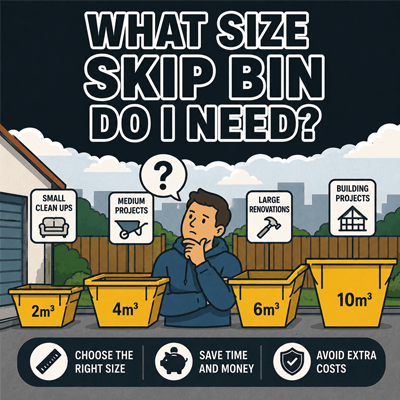
Heavy materials may require a dedicated heavy waste bin depending on the quantity being disposed of. Concrete, bricks, soil, and rubble can quickly add significant weight to a bin, making it important to select the correct bin type and size.
If you are undertaking a bathroom, kitchen, or outdoor renovation, discussing the waste type when booking will help ensure the most suitable skip bin is supplied.
Green Waste That Can Be Disposed of in a Skip Bin
Garden projects often generate more waste than expected. Tree branches, leaves, grass clippings, shrubs, weeds, and small logs are generally accepted in green waste skip bins.
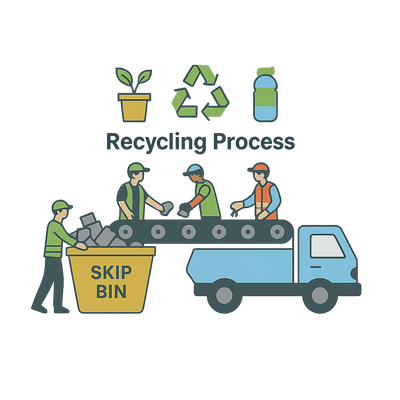
Green waste bins are often more economical because the material can be processed into mulch and compost rather than being sent to landfill. Separating garden waste from general rubbish can therefore reduce disposal costs while supporting recycling efforts.
If you are planning major landscaping work, pruning trees, or clearing an overgrown backyard, a dedicated green waste skip bin may be the best option.
Why Hazardous Waste Cannot Go in a Skip Bin
Certain materials are prohibited because they present a risk to people, equipment, and the environment. Hazardous waste requires specialised handling and disposal methods that are different from standard waste processing.
Items such as chemicals, solvents, pesticides, paints, oils, fuels, gas bottles, asbestos, and medical waste should never be placed in a skip bin. These materials can leak, ignite, contaminate recycling streams, or create serious health hazards for waste handlers.
Many local councils and designated recycling facilities offer collection programs for hazardous waste, making it possible to dispose of these items safely and legally.
Batteries and Electronic Waste Require Special Disposal
Modern households contain more electronic devices than ever before. Old televisions, computers, printers, mobile phones, power tools, and batteries often contain valuable recyclable materials alongside substances that can be harmful if sent to landfill.
Lithium batteries are of particular concern because damaged batteries can ignite and cause fires during transport and processing. For this reason, batteries should always be recycled through approved collection points rather than being placed in a skip bin.
Many electronic retailers and council recycling centres now offer dedicated e waste recycling services throughout Melbourne.
Whitegoods and Appliances May Need Special Arrangements
Items such as refrigerators, freezers, air conditioners, washing machines, and dryers can often be accepted, but some appliances require special handling before disposal.
Refrigerators and air conditioners may contain refrigerant gases that must be removed correctly before processing. Depending on local regulations and recycling requirements, additional charges or special arrangements may apply.
If you intend to dispose of large appliances, it is always worth checking with us before loading them into the bin.
Why Overloading a Skip Bin Can Cause Problems
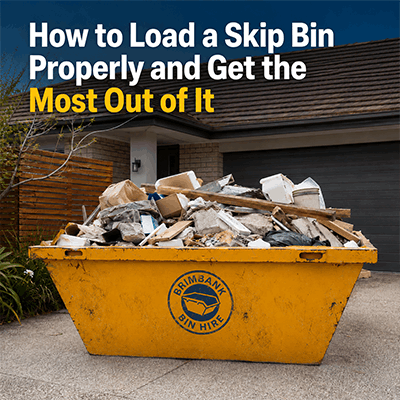
Even when all items in the bin are acceptable, loading practices still matter. Waste should remain below the top rim of the skip bin at all times. Overfilled bins are unsafe to transport and may be refused collection until excess material is removed.
Heavy materials should be distributed evenly throughout the bin to prevent instability during transport. Placing excessively heavy items in one area can make lifting and collection more difficult.
Taking a few extra minutes to load the bin properly can help ensure a smooth and trouble free collection.
Getting the Most Value From Your Skip Bin Hire
Understanding what can and cannot go in a skip bin helps avoid unexpected costs and ensures waste is disposed of responsibly. Most household rubbish, renovation debris, furniture, and green waste can be placed in a skip bin, making them an ideal solution for a wide range of projects.
Before booking, it is always worth discussing your waste type with us. A quick conversation can help identify any restricted materials, ensure the correct bin is supplied, and prevent delays when collection day arrives.